A useful kitchen plan follows the work: bringing food in, preparing it, cooking, serving and cleaning up.
Map the moving work
Walk through a meal without the child in the work area. Mark the places where adults carry hot dishes, open appliance doors and set down utensils. Include the dishwasher when open, rubbish and recycling, shopping bags and the route to the refrigerator. The busiest point may be serving dinner rather than using the stove.
The U.S. Fire Administration's cooking guidance recommends a three-foot safety zone around stoves and grills, turning pot handles away from the edge, and never holding a child while cooking or carrying hot liquids. Use that guidance alongside the appliance manuals. A learning platform beside a cooker is not made suitable by a worksheet or by a child standing still once.
Give each kind of access its own answer
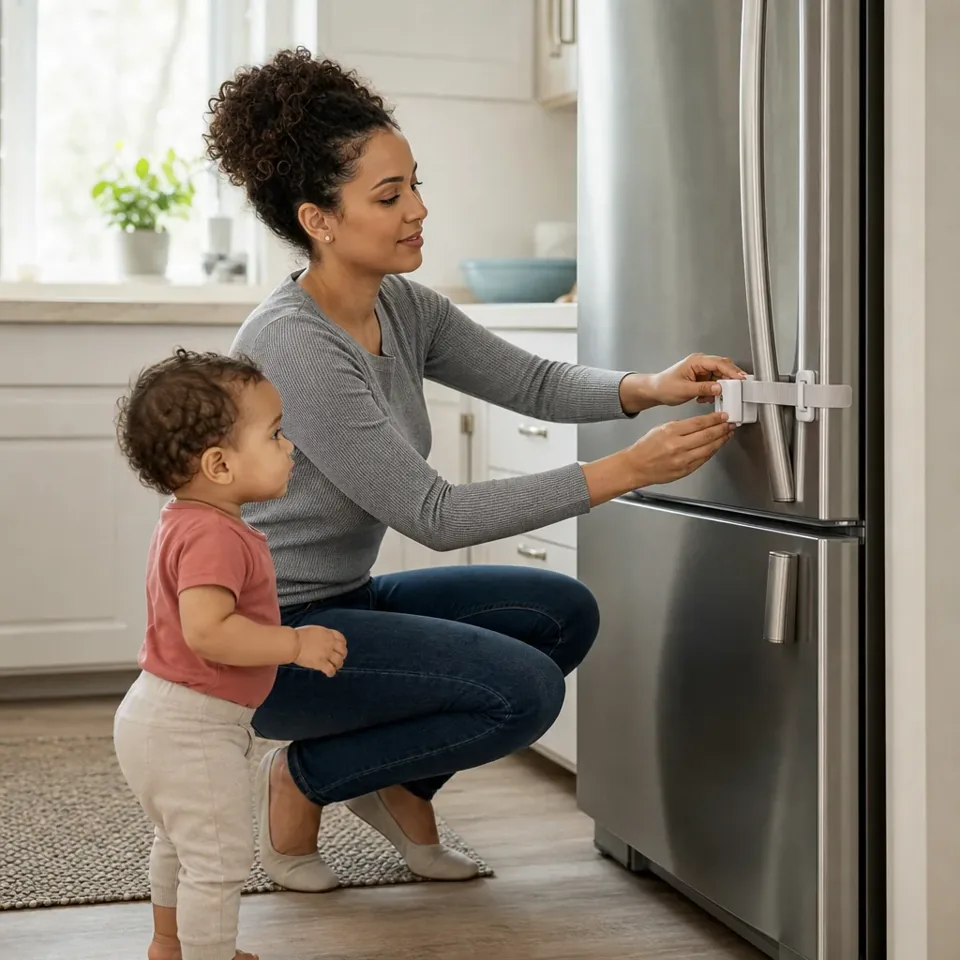
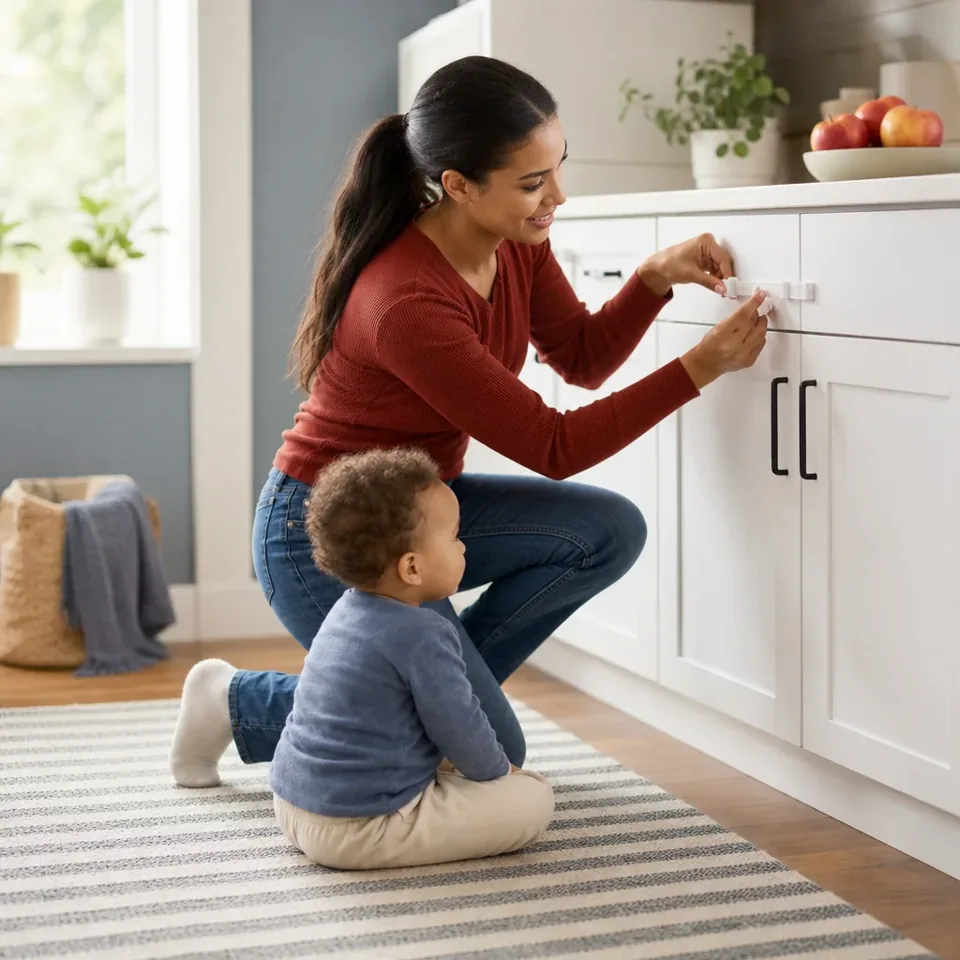
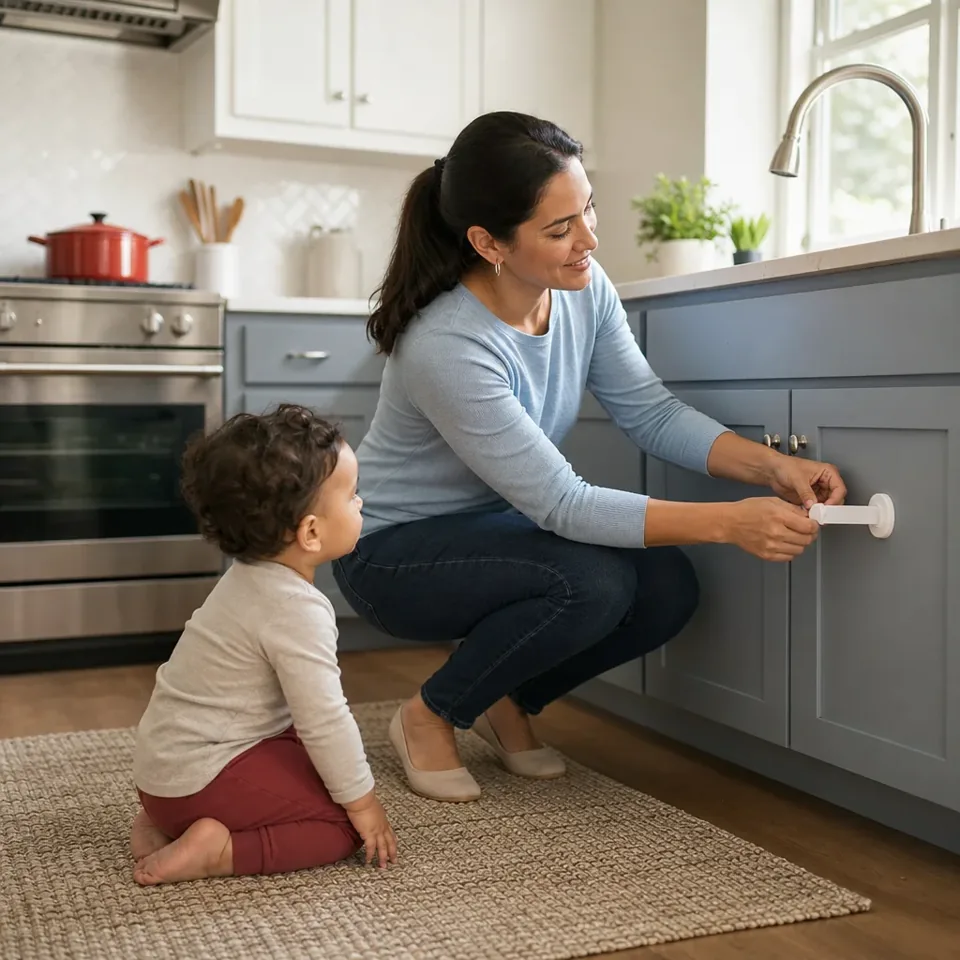
For storage, identify the cabinet or drawer containing the hazardous item and arrange secure storage and the appropriate access control. For appliances, find the actual manufacturer's operating and installation requirements. For the work area, decide how the child will be supervised outside it. These are separate layers; a latch on one cupboard does not complete the room.
Set a place for hot items that does not require someone to reach across the child. Put the clean-up products away after use rather than leaving them out for a second task. Where you cannot resolve a layout problem, change the workflow or seek competent advice before using the space that way. Do not add unapproved stove accessories or improvise appliance modifications from a photograph.
Make the handoff about the next action
“Watch the child” is too vague when two adults think the other person is doing it. State who has the child while another person drains pasta or unloads the dishwasher. Agree how that responsibility transfers. Check the plan after changing a bin, moving an appliance or beginning a new routine such as preparing packed meals.
An invented dinner routine
Two adults, one hot-pan crossing
One caregiver cooks while the other prepares a supervised play activity outside the cooking route. Before the pan comes off the stove, the cook says what they are about to carry and waits for the other adult to confirm the child's location. The new room sketch moves the serving area so the cook does not pass the child's chair. Their task list also assigns the dishwasher unloading and cleaner put-away steps instead of assuming those will happen automatically after dinner.
Make it your own
Plan one meal from preparation to clean-up
Use the fields for your practical notes, then print a copy for the handoff. Entries stay on this page and reset on reload.
These fields do not save or send your entries. Avoid private health, access, or contact details. Without JavaScript, you can still fill in and print the page with your browser.
Add a separate record to plan for refrigerator access, and map the kitchen's hazardous storage.
The basis for this guide
Sources & editorial notes
Primary sources support the health, safety, and technical statements linked above. Worked examples and household worksheets are practical illustrations prepared for this guide; they are not product tests.
Revised October 31, 2026. No independent medical or specialist review is credited to this edition. Read our editorial standards.
Illustrative imagery accompanies our guides; it does not document testing, a reader’s home, or a clinical assessment.
Report a correction ↗