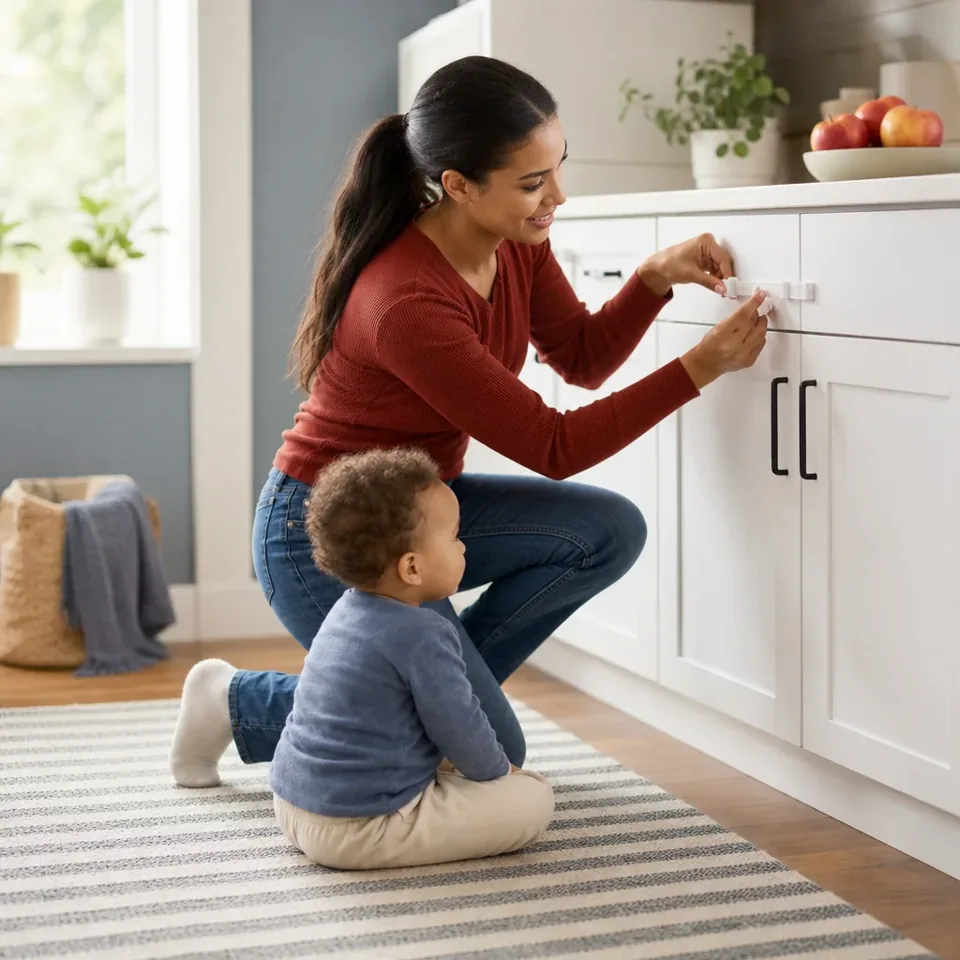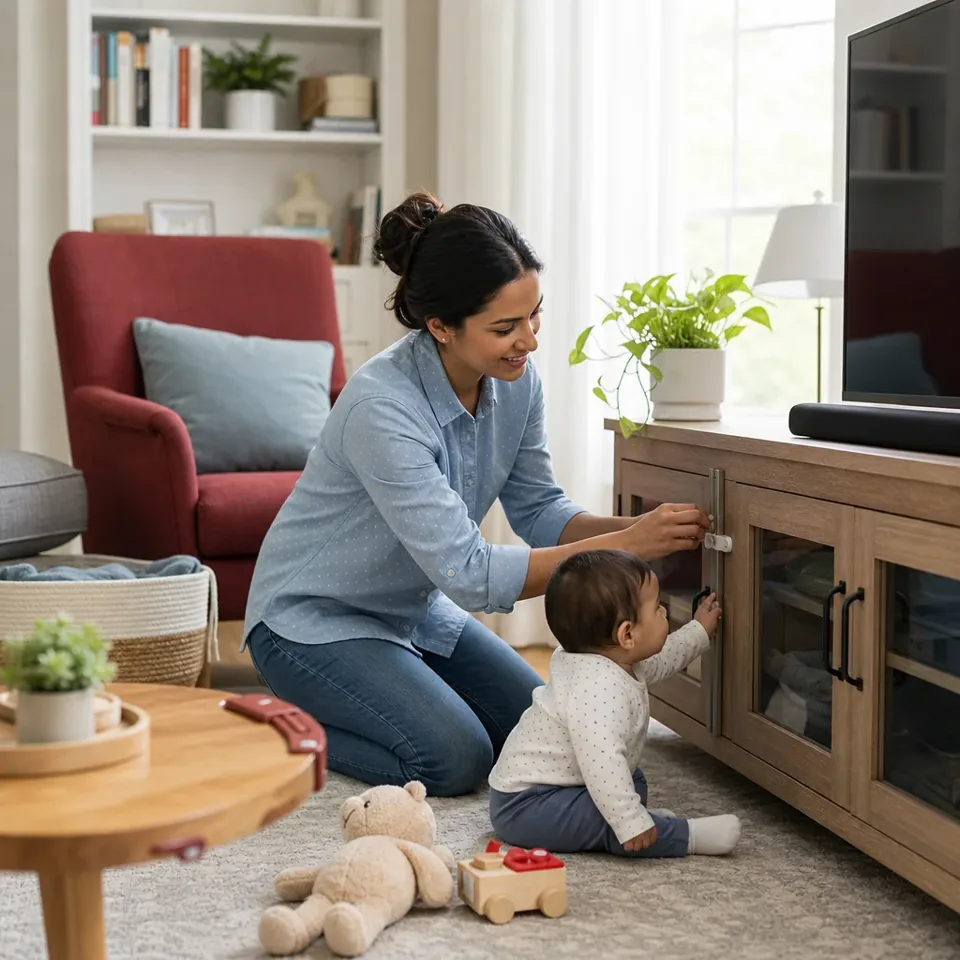
Keep those decisions separate. A latch that limits opening does not establish that the dresser or cabinet is anchored correctly.
Inventory the drawer, not just the handle
Record its contents, height, opening direction and the space behind the front. Identify what needs to move into secure storage now. Include lower drawers that contain ordinary items: a reachable drawer can also become something a child tries to climb. Do not ask a child to pull on furniture as an assessment.
The CPSC Anchor It guidance addresses furniture tip-over prevention and following the manufacturer's securing instructions. That is a different question from choosing a drawer latch. Find the furniture model and supplied anti-tip instructions; ask the manufacturer or a competent installer when the wall or furniture attachment point is uncertain.
Match the access control to the construction
Check the proposed latch instructions for the drawer's material, clearance and operation. An internal mechanism needs room to operate, and an external device needs a suitable attachment surface. Note any restrictions about preparation, fixing, curing or inspection directly from its instructions. An unseen photograph of a similar drawer is not enough to select the fitting method.
Keep magnetic keys, loose components and tools in adult-controlled storage. Check that adults who need the drawer can use the mechanism consistently. If the household repeatedly leaves it disengaged, identify the practical obstacle rather than treating repeated reminders as a complete solution. Avoid makeshift rods, long utensils, ties or adhesives that were not designed and instructed for the job.
Connect opening, use and rechecking
Think through the full task that uses the drawer. Where will its contents be placed while an adult works? Who closes and checks it afterward? If dangerous contents move elsewhere, update both storage records rather than leaving the old label in the plan. Reassess after moving furniture, changing contents or noticing damage to the device.
A planning example
The drawer label says “baking,” but the contents changed
A family lists a kitchen drawer as low priority because it used to hold tea towels. During the room inventory they find scissors, spare batteries and loose bag clips inside. They move the hazardous contents to appropriate controlled storage, then assess the drawer's access control separately. Upstairs, a dresser has a similar-looking handle but a different construction and an unresolved anchoring question. The family gives it a separate record instead of buying the same latch for every handle.
Make it your own
Record drawer access and furniture stability separately
Use the fields for your practical notes, then print a copy for the handoff. Entries stay on this page and reset on reload.
These fields do not save or send your entries. Avoid private health, access, or contact details. Without JavaScript, you can still fill in and print the page with your browser.
Use the companion guides to choose cabinet controls for enclosed storage and check the stability plan for living-room furniture.
The basis for this guide
Sources & editorial notes
Primary sources support the health, safety, and technical statements linked above. Worked examples and household worksheets are practical illustrations prepared for this guide; they are not product tests.
Revised October 31, 2026. No independent medical or specialist review is credited to this edition. Read our editorial standards.
Illustrative imagery accompanies our guides; it does not document testing, a reader’s home, or a clinical assessment.
Report a correction ↗