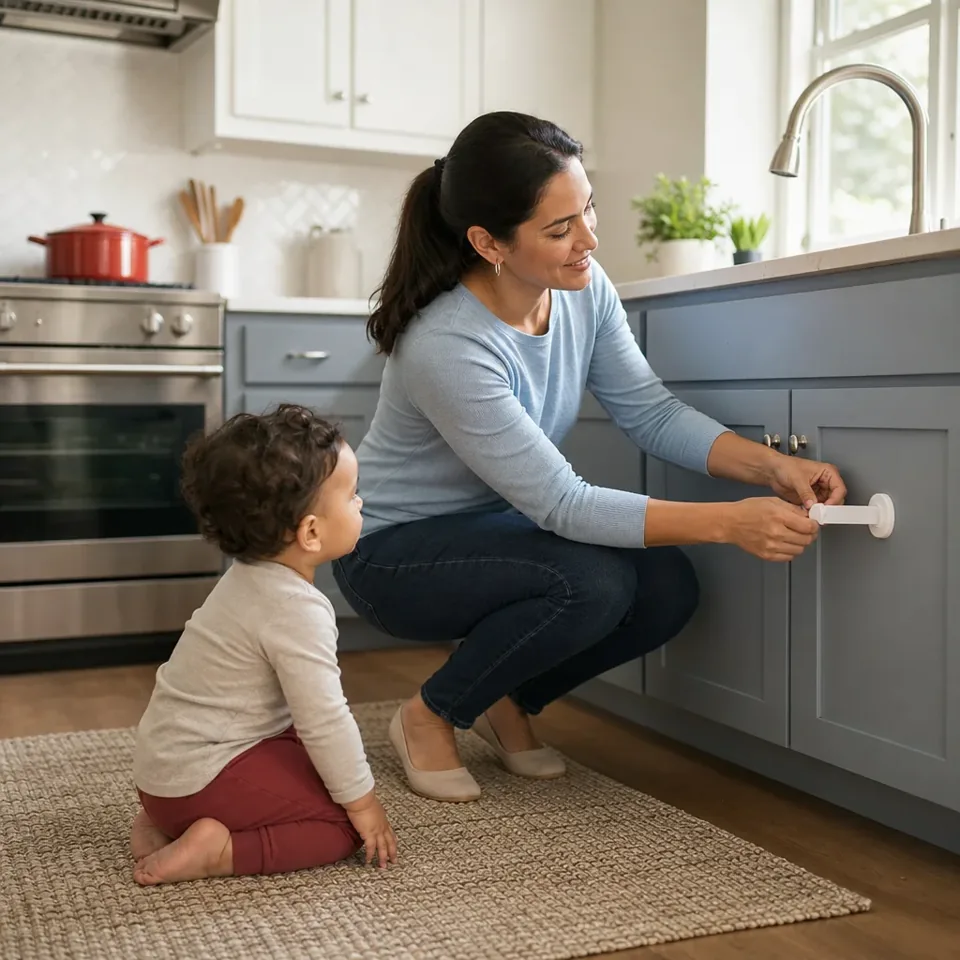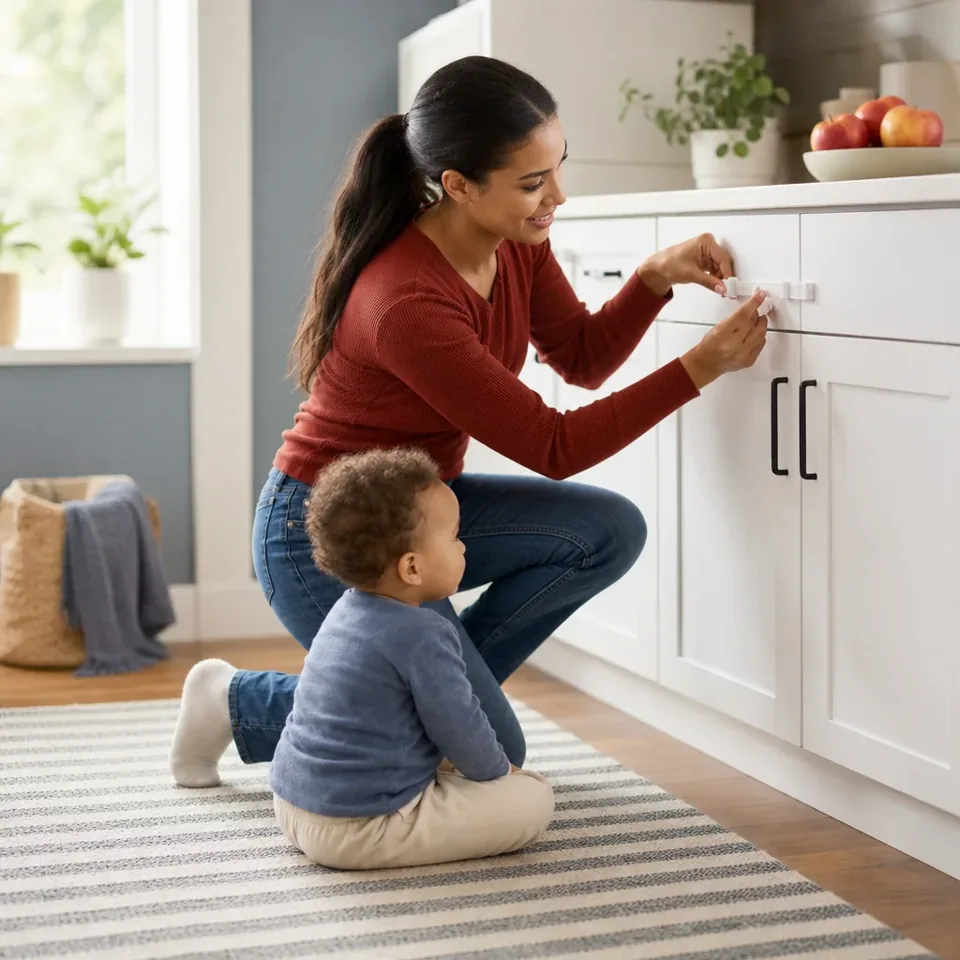
Different doors, surfaces and household tasks call for different questions. A cabinet that looks locked still needs a clear closing routine.
Move the decision upstream
List medicines, cleaning products, sharp items and other hazardous contents before considering a device. Decide where each belongs in secure storage. The CPSC childproofing guidance recommends safety latches and locks to help control access and notes that child-resistant packaging is not childproof. Keeping a bottle in its original packaging does not replace secure storage.
Do not leave a collection of hazardous items on the worktop while solving the cabinet problem. Make a temporary adult-controlled arrangement first. Record the permanent location in the household plan so the next caregiver does not put an item back in its former reachable place.
Write a compatibility list
Record whether the cabinet has a single door, paired doors or a sliding panel, along with the material and available mounting area. Check how shelves, hinges and door stops affect the proposed device. For an internal lock, find the required internal clearance in its own instructions. For an external device, check the permitted surfaces and fixing method.
Rented homes may need a conversation with the property manager before changes are made. Ask about an unresolved fitting rather than substituting a rubber band, cord or general-purpose adhesive. Check how an adult will unlock, close and reengage the control during an ordinary task. Include users with different reach, grip or mobility needs in that decision.
Make secure storage the end of the task
A useful cleaning routine ends after the product is put away and the cabinet control checked. It does not end when the spill is wiped. Decide who checks the control when supplies are unpacked, when a visitor helps or when a replacement container arrives. If the control is damaged or being defeated, keep the child away from the hazard while arranging a suitable solution.
An illustrative clean-up
The replacement bottle no longer fits
A caregiver buys a larger cleaner because it costs less per ounce. It no longer fits on the intended shelf, so it is initially left beside the cabinet. The household's storage record makes that mismatch visible. They arrange another appropriate secure location before the cleaner becomes part of the daily routine. Their next shopping note includes the available storage dimensions, and their end-of-task note says who returns the bottle and checks the cabinet control.
Make it your own
Give hazardous contents a secure destination
Use the fields for your practical notes, then print a copy for the handoff. Entries stay on this page and reset on reload.
These fields do not save or send your entries. Avoid private health, access, or contact details. Without JavaScript, you can still fill in and print the page with your browser.
For adjacent storage, record each drawer's opening and clearance. Then change the routine around meal preparation so access controls fit the work.
The basis for this guide
Sources & editorial notes
Primary sources support the health, safety, and technical statements linked above. Worked examples and household worksheets are practical illustrations prepared for this guide; they are not product tests.
Revised October 31, 2026. No independent medical or specialist review is credited to this edition. Read our editorial standards.
Illustrative imagery accompanies our guides; it does not document testing, a reader’s home, or a clinical assessment.
Report a correction ↗