A garden changes with weather, deliveries and maintenance. A clear supervision arrangement matters every time the child is outside.
Walk the route before setting up play
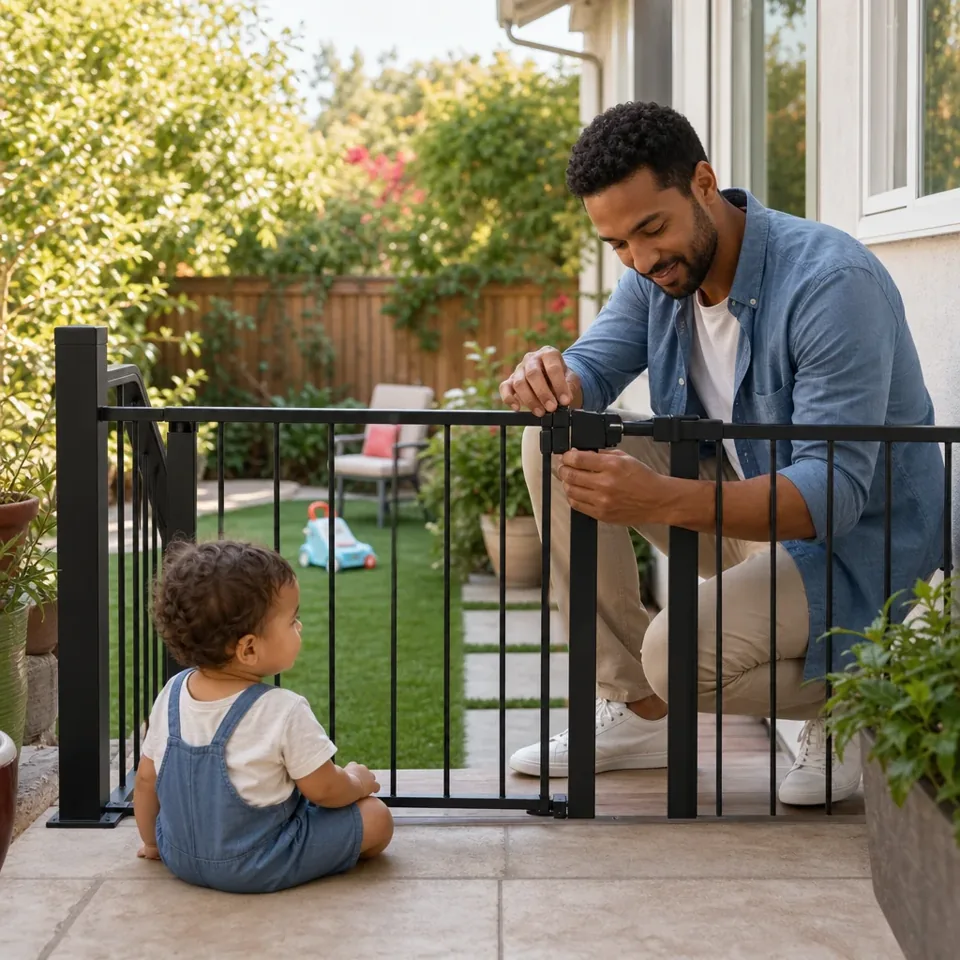
Begin at the door used to enter the garden. Record steps, gates, stored tools, chemicals, loose materials and any water access. Include buckets, water features and temporary play equipment, not only a swimming pool. Identify where the child will be supervised while an adult deals with a delivery, opens a shed or moves equipment.
The CDC's drowning-prevention guidance emphasizes close, constant supervision and pool isolation using a four-sided fence, at least four feet high, with self-closing and self-latching gates. It separates swimming skills from supervision. Use appropriate professional advice and local requirements for your pool or property; an ordinary garden gate or this worksheet does not establish a compliant pool barrier.
Treat garden products as products with instructions
Identify fertilizers, pesticides, fuels and cleaning products by their original labels. Keep them in appropriate secure storage and follow the label's use and re-entry requirements. Calling a product “natural” does not answer whether a child can access it or when a treated area can be used. For an unidentified plant, chemical or discarded container, seek appropriate identification instead of guessing from a photograph.
Ask the owner of play equipment for its exact setup, maintenance and use instructions. Loose fixings, damaged parts or an unknown installation are reasons to keep that area out of use while the question is resolved. Avoid making a general promise that clearing visible clutter makes an outdoor area childproof.
Name who has the child during transitions
Garden routines often change at the door: one adult goes inside for a drink, another starts tidying, and each assumes the other is watching. Use an explicit handoff. If the supervising adult must leave the area, arrange another responsible adult or take the child with them. Put equipment, water containers and products away according to their instructions after use, and re-establish the intended access controls.
An illustrative garden afternoon
A delivery interrupts the usual play plan
A household expects a delivery through the side gate during outdoor play. Their written plan assigns one adult to the delivery and another to the child, rather than treating the open gate as a minor exception. Before play, they remove a forgotten water-filled bucket and put maintenance supplies in secure storage. They also leave a damaged play item out of use pending advice. At the end, they record who restores the access arrangement so the next caregiver knows what changed that day.
Make it your own
Plan outdoor access before play begins
Use the fields for your practical notes, then print a copy for the handoff. Entries stay on this page and reset on reload.
These fields do not save or send your entries. Avoid private health, access, or contact details. Without JavaScript, you can still fill in and print the page with your browser.
Bring these actions into the household hazard and responsibility plan. For a pool outing, prepare the changing routine separately from water safety.
The basis for this guide
Sources & editorial notes
Primary sources support the health, safety, and technical statements linked above. Worked examples and household worksheets are practical illustrations prepared for this guide; they are not product tests.
Revised October 31, 2026. No independent medical or specialist review is credited to this edition. Read our editorial standards.
Illustrative imagery accompanies our guides; it does not document testing, a reader’s home, or a clinical assessment.
Report a correction ↗