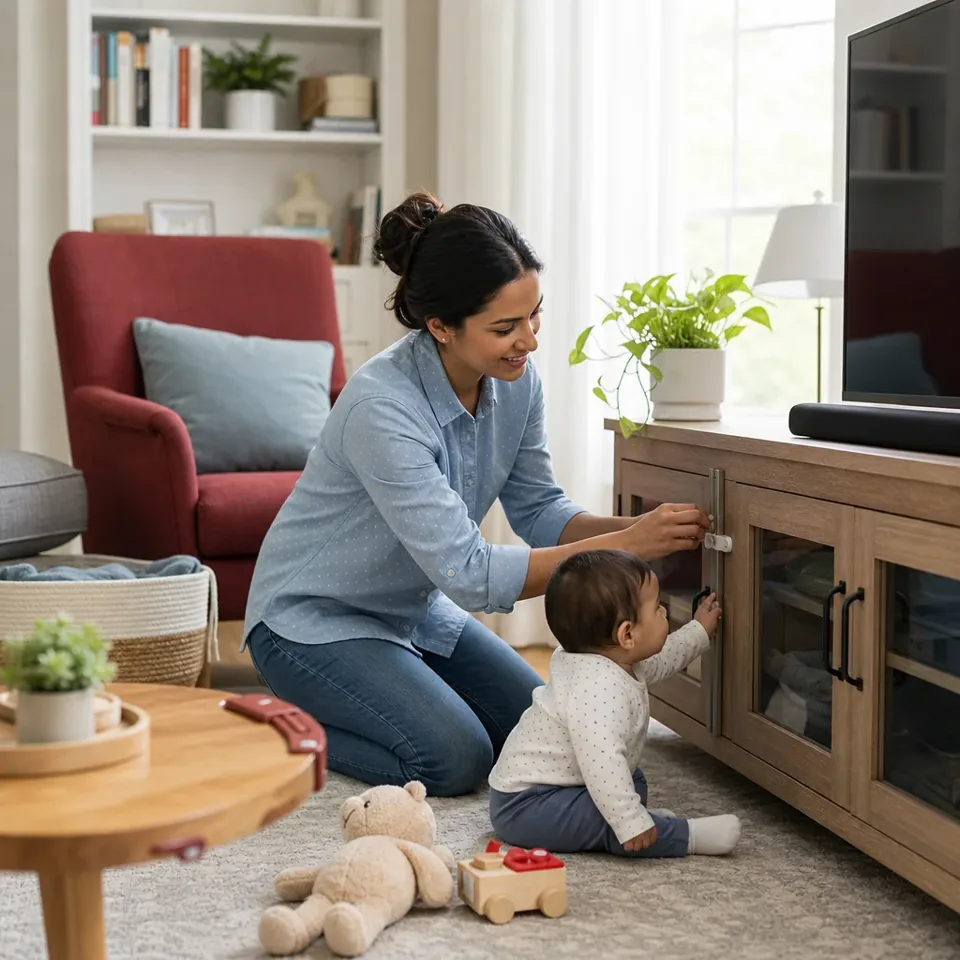
Look at where the child plays and where adults put things down. A softer-looking room can still contain climbing, pulling and access hazards.
Sketch the room as it is used
Include the sofa, tables, storage units, television, windows and walking routes. Then mark the places that change during a normal day: a charging phone, an open visitor's bag, a cup on a low table or a pile of folded laundry. The purpose is to notice the working room, not photograph an unusually tidy version of it.
Keep stability separate from the shape of a furniture edge. The CPSC's tip-over prevention guidance calls for securing furniture and televisions appropriately and following manufacturer instructions. A low-looking storage unit or a TV standing on a broad base should not be declared stable from appearance alone. Record model and installation questions for the appropriate person.
Give ordinary objects a predictable place
Choose an adult-controlled location for bags, remotes, chargers and small loose objects. Ask visiting adults to use it. A basket labelled “adult things” on the floor does not solve the access question. Make sure the arrangement is workable for the people who actually use the room, including anyone who cannot comfortably reach a high shelf.
Consider the route between the play area and the room's exits. Avoid moving furniture in a way that blocks that route, creates access to a window or interferes with an appliance's clearances. If furniture must move, account for its anchoring, cables and instructions before using the new arrangement. Do not test stability by letting a child climb it.
Make a reset part of the room's routine
A short reset can ask whether adult belongings are stored, a storage control has been reengaged and new items have appeared. Assign those actions after visitors leave and after rearranging the room. Keep unresolved equipment questions on the record; a tidy floor is not evidence that the furniture work is complete.
A room-layout example
The visitor bag is the changing part
An invented household's furniture layout stays much the same, but friends often leave bags beside the sofa. The family adds a clear adult-controlled drop point and explains it when people arrive. Their room sketch also shows that moving the toy chest beside the window would create a new climbing route. They keep the chest's placement question separate from their daily tidy-up, and ask for the appropriate installation information rather than assuming a neater corner is a safer corner.
Make it your own
Keep the room layout and daily reset together
Use the fields for your practical notes, then print a copy for the handoff. Entries stay on this page and reset on reload.
These fields do not save or send your entries. Avoid private health, access, or contact details. Without JavaScript, you can still fill in and print the page with your browser.
Next, make a separate anchoring record for the television and check climbable furniture near windows.
If the room has a hearth or heating appliance, plan the fireplace boundary and after-use handoff as a separate task from the general room reset.
The basis for this guide
Sources & editorial notes
Primary sources support the health, safety, and technical statements linked above. Worked examples and household worksheets are practical illustrations prepared for this guide; they are not product tests.
Revised October 31, 2026. No independent medical or specialist review is credited to this edition. Read our editorial standards.
Illustrative imagery accompanies our guides; it does not document testing, a reader’s home, or a clinical assessment.
Report a correction ↗