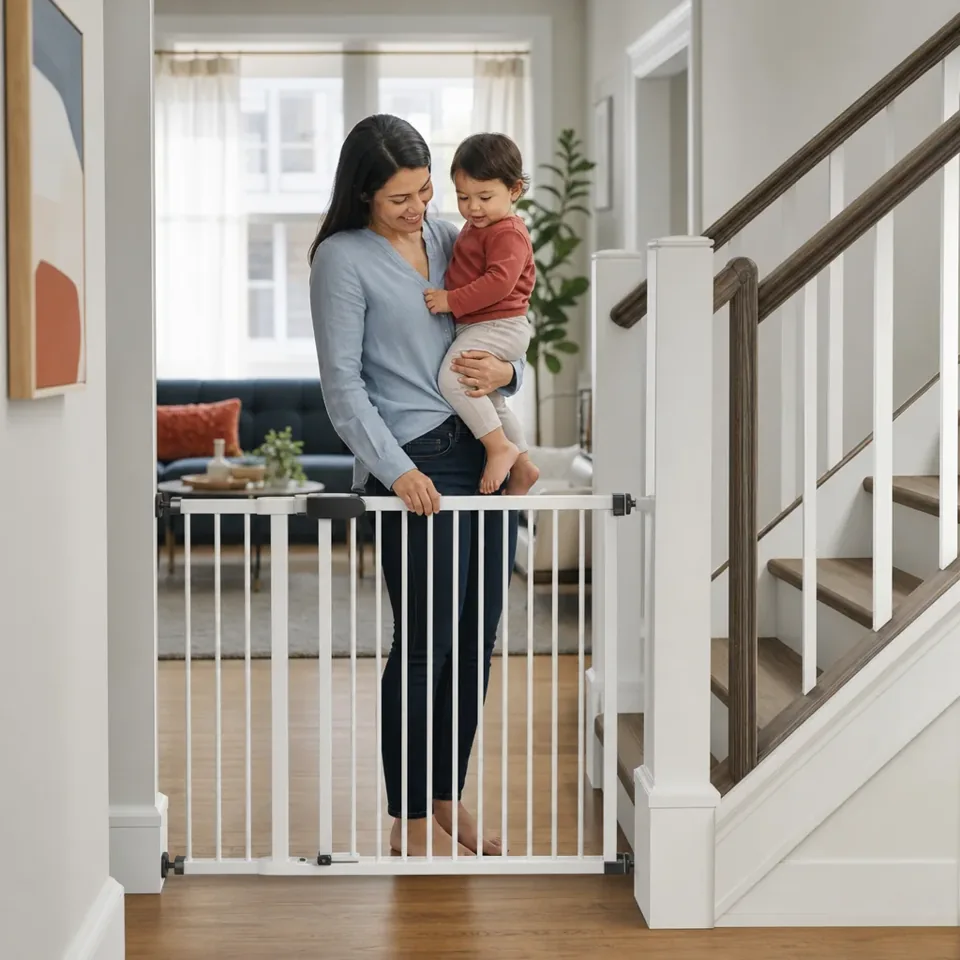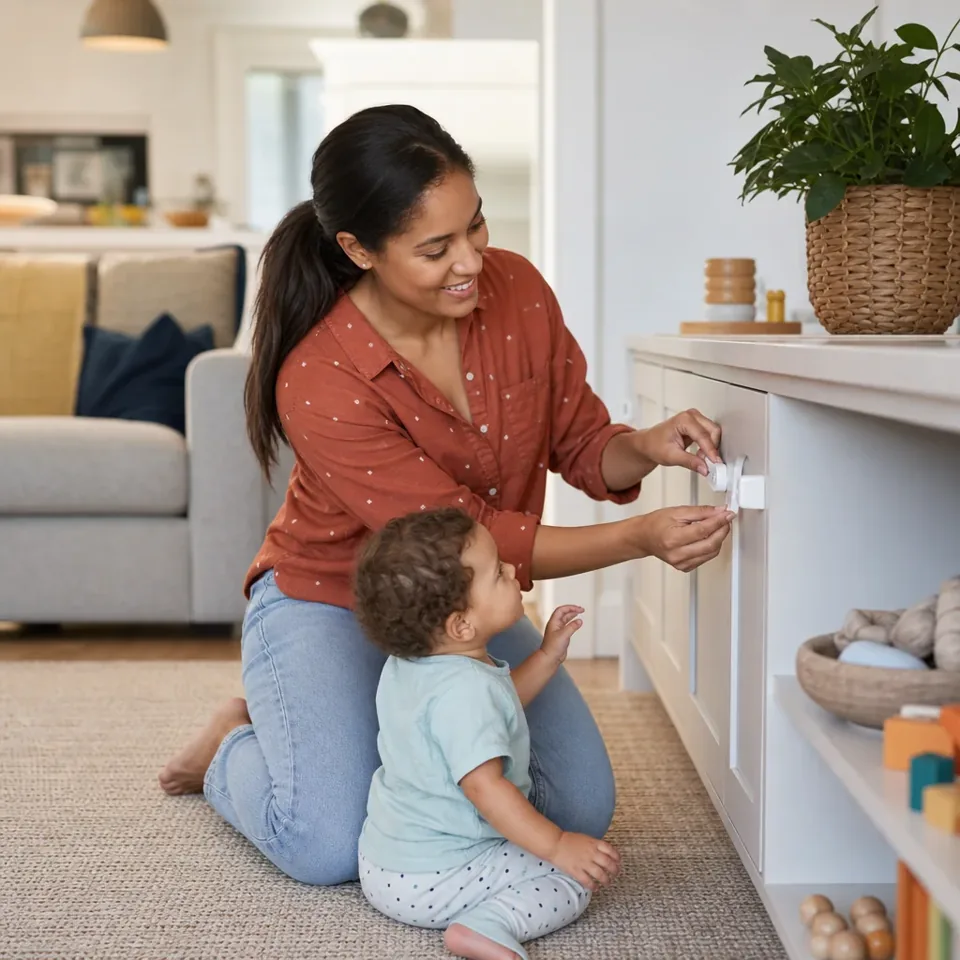
The goal is a workable household plan. Buying a collection of safety devices does not establish that every hazard has been addressed.
Use one record for each unresolved situation
Choose a room and describe what a child might reach, pull, climb or gain access to. Write the observation in plain words: “cleaner left beside the sink after use,” or “dresser anchoring instructions missing.” These are more useful than a room-wide label such as “kitchen safe.” Keep the child supervised elsewhere while you inspect or arrange work.
The CPSC overview of childproofing devices emphasizes following instructions and the limits of devices. Use it to identify areas needing attention, then consult the relevant product's current instructions. A generic list cannot inspect a particular home, certify an installation or replace supervision.
Give every action an owner and an end condition
Distinguish an action you can complete now from a question needing a manufacturer, landlord or competent installer. “Ask about the window guard” is incomplete until someone is named and the answer is recorded. A useful end condition might be the appropriate installer confirming the documented installation requirements; it should not be merely “ordered a product.”
Record a temporary arrangement for unresolved hazards. This may mean keeping the child away from a particular space while the adults arrange suitable help. Do not let a future shopping list become the only protection in the meantime. Keep decisions about emergency access, hazardous storage and heavy equipment visible rather than mixing them with decorative changes.
Reopen the plan when something changes
Children's abilities, room layouts and daily routines change. Add a recheck trigger to each record: a move, furniture delivery, new caregiver, damaged device or changed access. A calendar reminder can help organize that work, but it does not prove the situation stayed unchanged between dates. Ask adults to report new observations as they occur.
Use small, relevant groups when reading further. It is easier to finish the window questions or a cleaning-product storage routine than to compare dozens of unrelated products at once. Keep the resulting records where a caregiver can find them, with model instructions and unanswered questions together.
An invented first walk-through
Three observations become three different jobs
A household notes an unsecured storage unit, an unfamiliar window fitting and detergent that is left out during washing. The furniture question goes to a competent installer with the model details; the window question goes to the property manager; the detergent task becomes a clear put-away handoff after each use. Their worksheet keeps all three visible without marking the room “finished” simply because the easiest task was completed. The child's access stays controlled while the unresolved work is arranged.
Make it your own
Make a short action list you can actually finish
Use the fields for your practical notes, then print a copy for the handoff. Entries stay on this page and reset on reload.
These fields do not save or send your entries. Avoid private health, access, or contact details. Without JavaScript, you can still fill in and print the page with your browser.
Start by surveying window access and escape needs, documenting the boundaries that need a child gate, or including detergent storage in your room walk.
The basis for this guide
Sources & editorial notes
Primary sources support the health, safety, and technical statements linked above. Worked examples and household worksheets are practical illustrations prepared for this guide; they are not product tests.
Revised October 31, 2026. No independent medical or specialist review is credited to this edition. Read our editorial standards.
Illustrative imagery accompanies our guides; it does not document testing, a reader’s home, or a clinical assessment.
Report a correction ↗