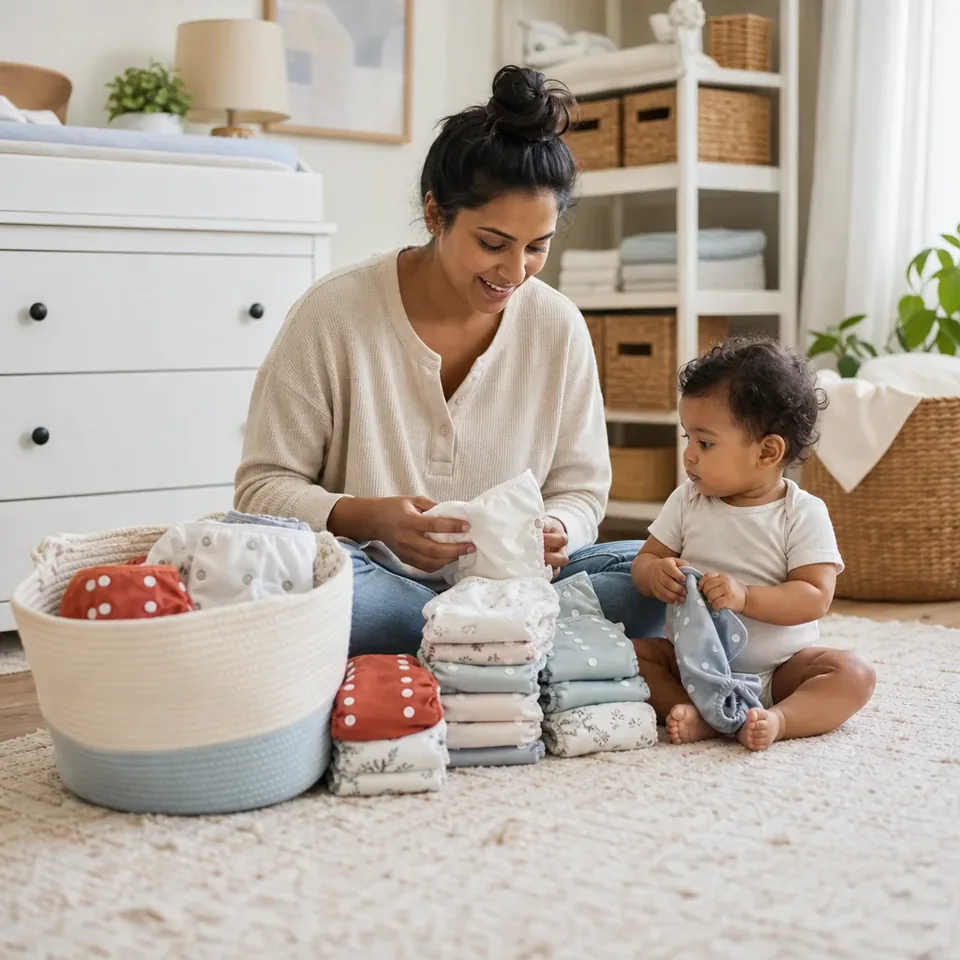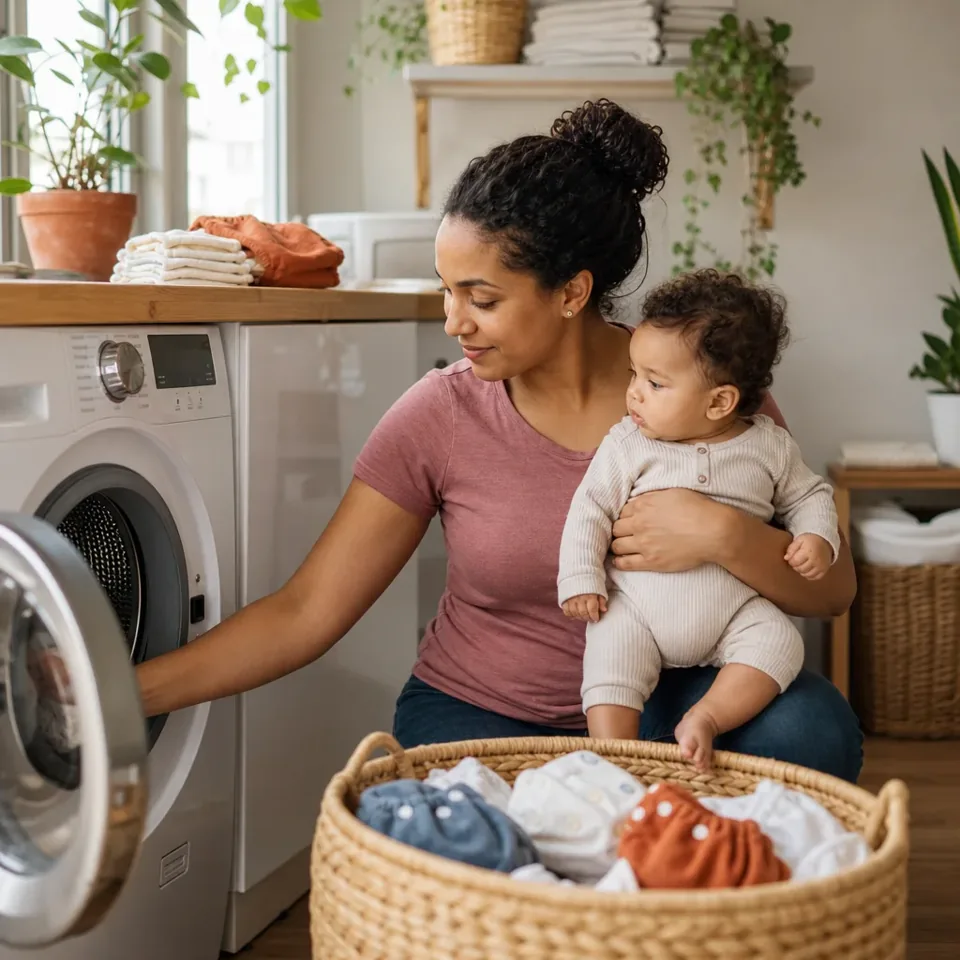
Count what must be put together, changed, washed, dried and carried. A small trial can answer practical questions a large starter bundle cannot.
Separate absorbency from the outer component
Read the exact product description to identify what absorbs, what forms the outer covering and what is included. Some systems have separate pieces; others combine functions in one item. Do not infer interchangeability from terms such as “pocket,” “all-in-one” or “hybrid.” Two products in the same broad category may require different parts, preparation and care.
The GroVia cloth-diaper guides illustrate these component distinctions for that manufacturer's systems. Consult the equivalent descriptions and instructions for anything you are considering. Check the stated size and use limits for the actual model; “one size” is not evidence that a product fits every newborn or child.
Follow one complete change through the household
Describe who prepares the components, who changes the child and how used items reach the laundry arrangement. Include what happens away from home and what a childcare provider is willing and equipped to use. Ask rather than assuming the same system will be accepted everywhere. A plan can use more than one approach without being a failure.
Look beyond the purchase price to the recurring work. Does the household have suitable laundry access? Where will items dry according to their instructions? Who can assemble clean components and prepare the next handoff? These questions help identify a workable routine; they do not establish that one material or system is universally cheaper, more absorbent or environmentally preferable.
Make a trial answer specific questions
Before buying a large quantity, list what a small trial needs to tell you: instructions understood, parts accounted for, suitable fit under the product guidance and a workable wash-to-ready sequence. Record any unresolved issue and ask the manufacturer. Keep current return conditions and included-component information with the comparison, rather than relying on an old recommendation or remembered bundle contents.
An illustrative system comparison
Two separate counts prevent a misleading shopping total
A household compares a combined diaper with a system using separate absorbent pieces and covers. It initially counts each package as one “diaper.” The component inventory shows the packages do not contain equivalent complete changes. The family rewrites the comparison in terms of usable combinations, the parts supplied and the instructions for each. It also asks the childcare provider what can be used there. The resulting plan describes the work and remaining questions without claiming a winner from the package price.
Make it your own
Compare a complete cloth-diaper routine
Use the fields for your practical notes, then print a copy for the handoff. Entries stay on this page and reset on reload.
These fields do not save or send your entries. Avoid private health, access, or contact details. Without JavaScript, you can still fill in and print the page with your browser.
Then calculate stock for a chosen wash interval and check the work involved in washing reusable diapers.
The basis for this guide
Sources & editorial notes
Primary sources support the health, safety, and technical statements linked above. Worked examples and household worksheets are practical illustrations prepared for this guide; they are not product tests.
Revised October 31, 2026. No independent medical or specialist review is credited to this edition. Read our editorial standards.
Illustrative imagery accompanies our guides; it does not document testing, a reader’s home, or a clinical assessment.
Report a correction ↗