Toilet learning varies between children. A purchase cannot establish readiness or guarantee a deadline. If there is pain, persistent difficulty, or another concern, discuss it with the pediatrician.
Two arrangements, different chores
| Question | Standalone potty chair | Toilet-mounted seat |
|---|---|---|
| Where does it go? | Needs its own floor location and storage plan. | Needs confirmed compatibility with the household toilet. |
| How is waste handled? | The removable container needs emptying and cleaning. | The toilet handles waste, but the seat and surrounding area still need cleaning. |
| How does the child reach it? | Check access to the actual chair. | Plan access and support according to the equipment instructions and your child's needs. |
| What happens between uses? | Decide where it stays without obstructing the room. | Decide whether adults must remove and replace it. |
Agree on a routine before adding rewards
The AAP recommends making a toilet-training plan and responding positively to progress rather than punishing mistakes. Talk with other caregivers about the words you use, where spare clothes live, and how you will handle cleanup calmly.
Try walking through the routine without expecting a result: finding the bathroom, dealing with clothing, locating supplies, and washing hands. Notice the awkward parts. A poorly positioned seat or inaccessible clothing is a practical problem to solve, not evidence that a child is deliberately being difficult.
Check items as you work through this list. These ticks reset on reload.
Keep the decision reversible
One arrangement may suit home while another suits a childcare setting. Ask what the other setting uses before buying duplicates. Introduce changes with explanation and familiarity rather than presenting a new product as a cure for setbacks. For the measurement questions around a stool, see our step-stool planning guide.
Compare the whole bathroom setup
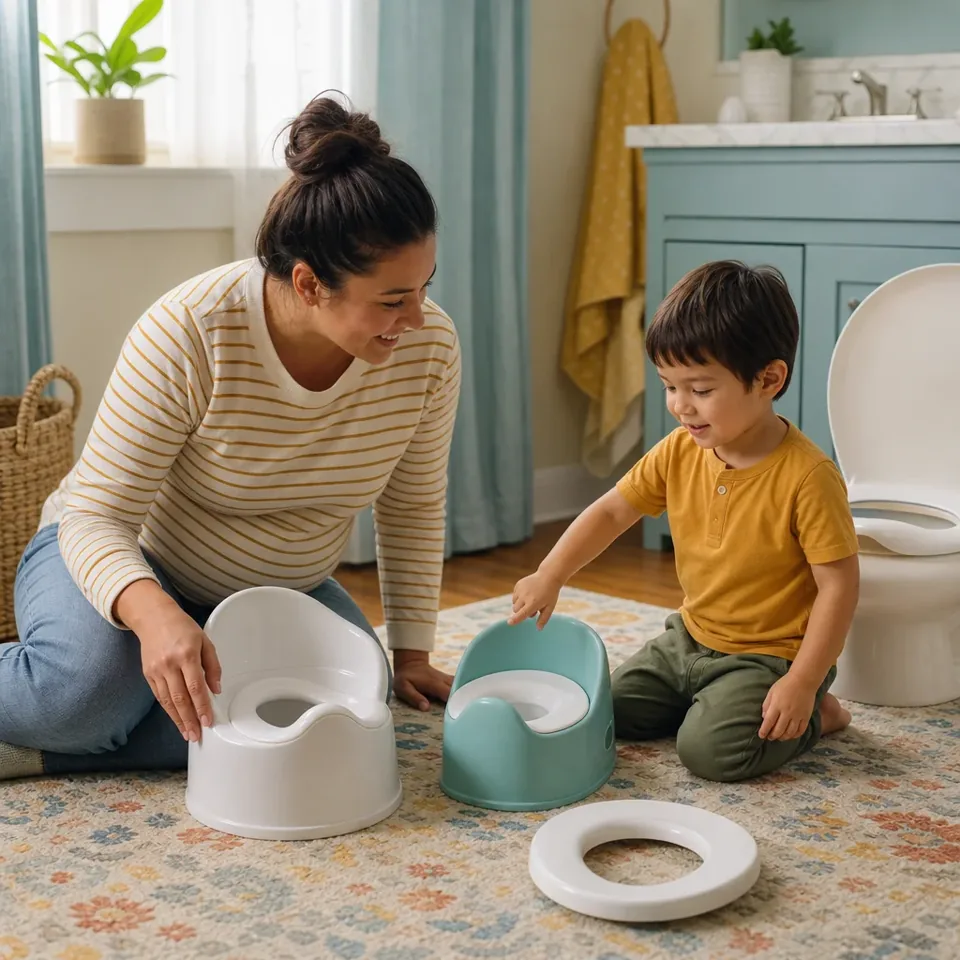
A potty chair and a seat on the household toilet create different jobs. A separate chair needs a place to live and a cleaning routine. A toilet-seat setup needs compatible equipment and a plan for the assistance your child requires. If you use a stool, check the exact product’s instructions, intended users, limits, and placement requirements. A stool that is suitable for one task or room is not automatically suitable for another.
Watch the sequence with an adult helping: approaching the setup, managing clothing, sitting as appropriate, cleanup, and handwashing. Find the point where help is needed rather than expecting independence because an accessory is present. Keep soaps, cleaners, medicines, and other hazards arranged to prevent child access; bringing a child closer to a sink changes what is reachable.
Use the same words across caregivers
The American Academy of Pediatrics’ parenting guidance emphasizes a positive, consistent approach. A practical household card can record the words you use, where supplies live, and which steps an adult helps with. The card is not a developmental readiness test or a schedule every child must follow.
A routine handoff
Keep the next adult from improvising
One caregiver writes: “Use the same setup in the same place. Spare clothing is in the labeled drawer. I help with clothing and handwashing. If the setup needs cleaning, follow the posted product instructions.” Another caregiver can use that routine without interpreting “we’re working on independence” as permission to leave the child to manage every step.
Agree what happens when it does not go smoothly
Have supplies ready for cleanup and a calm change of clothing. Decide which information actually needs to be passed to the next caregiver. A note about a practical difficulty can help; a scorecard of successes and failures can distract from the support your child needs.
Keep pain, persistent difficulties, or other care concerns for your child’s clinician. Changing the seat, adding a timer, or buying an accessory should not substitute for getting an appropriate concern assessed.
Make it your own
Our bathroom routine card
Use the fields for your practical notes, then print a copy for the handoff. Entries stay on this page and reset on reload.
These fields do not save or send your entries. Avoid private health, access, or contact details. Without JavaScript, you can still fill in and print the page with your browser.
The basis for this guide
Sources & editorial notes
Primary sources support the health, safety, and technical statements linked above. Worked examples and household worksheets are practical illustrations prepared for this guide; they are not product tests.
Revised October 8, 2026. No independent medical or specialist review is credited to this edition. Read our editorial standards.
Illustrative imagery accompanies our guides; it does not document testing, a reader’s home, or a clinical assessment.
Report a correction ↗