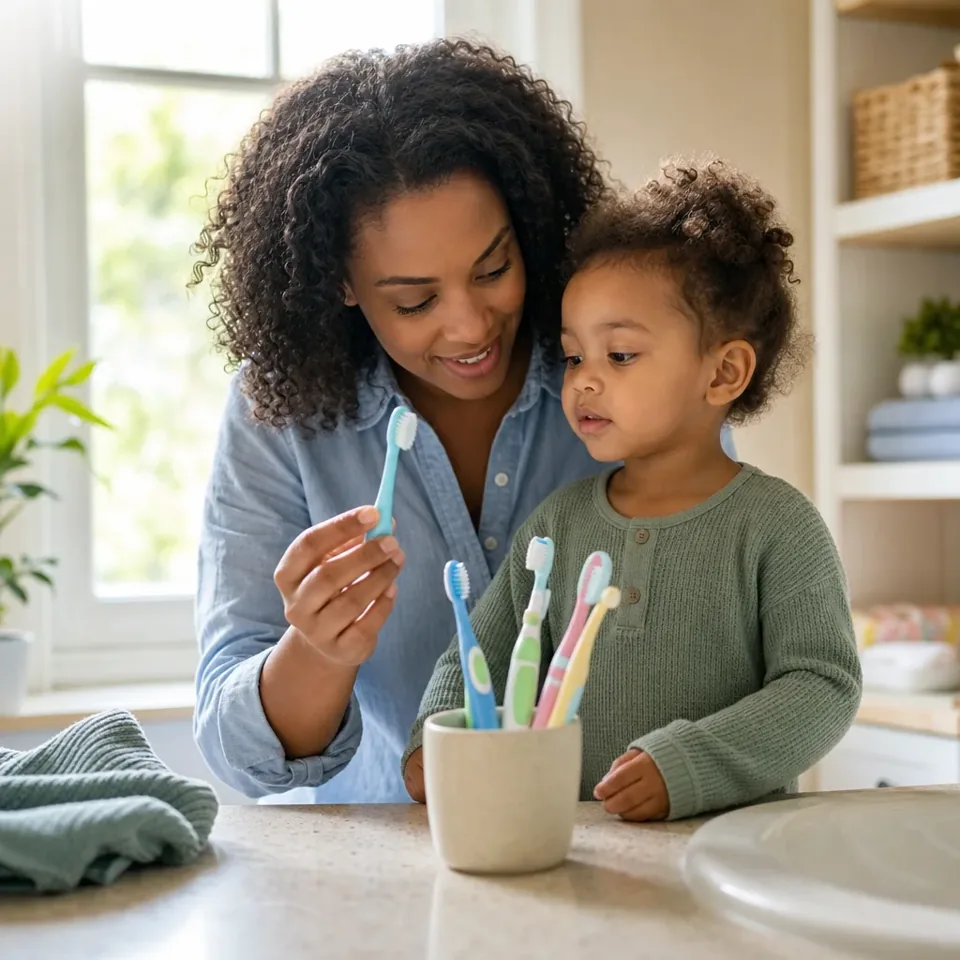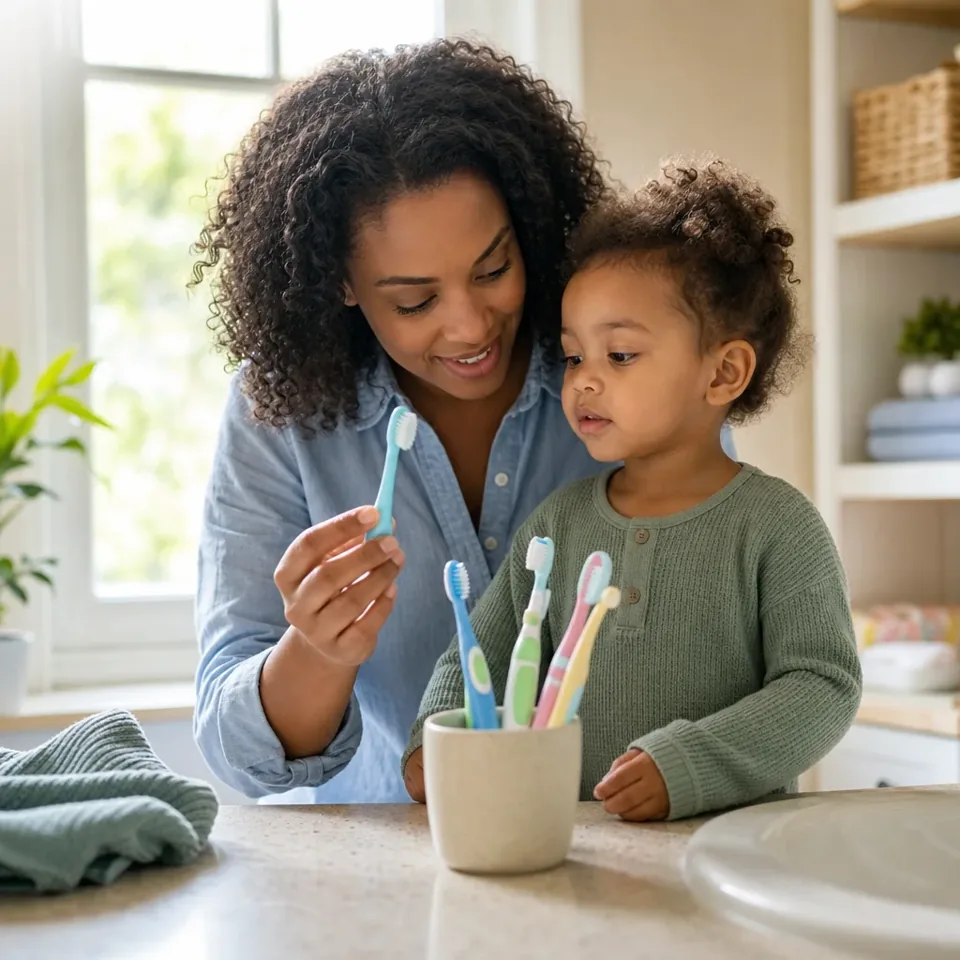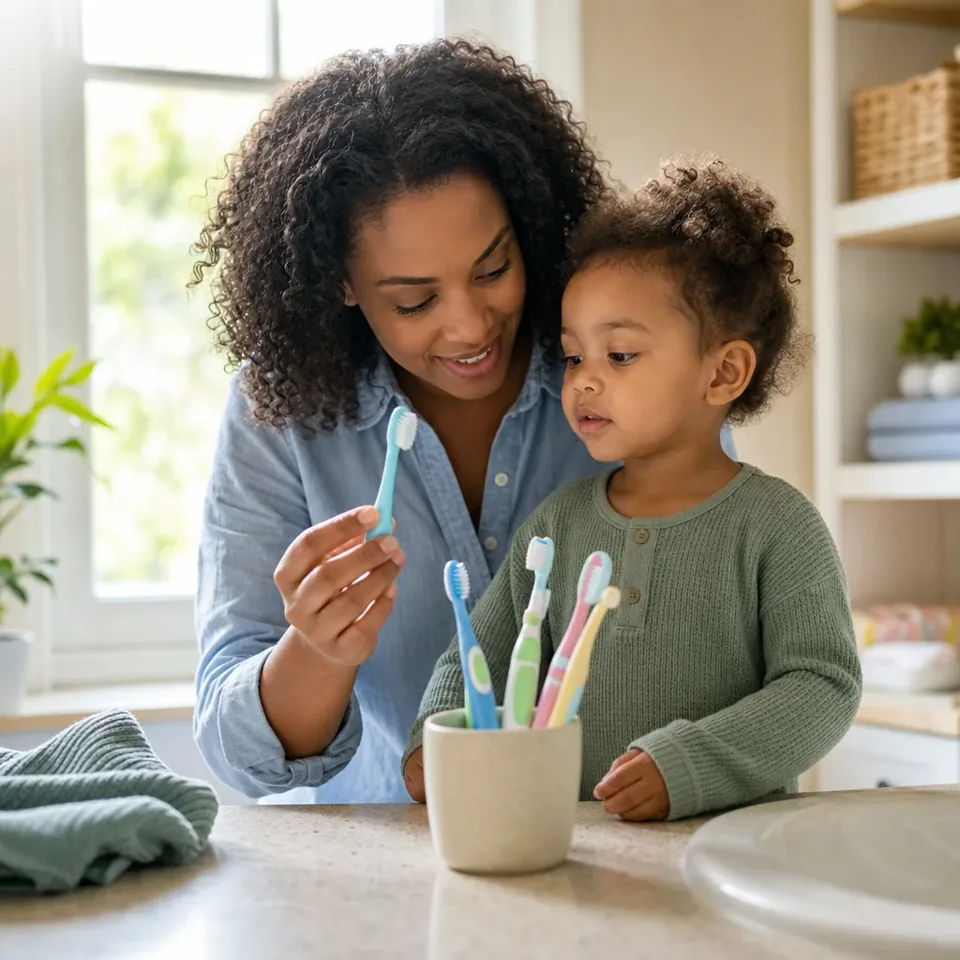
A fun handle or timer can support the task, but neither shows that every tooth has been brushed.
Start with the brushing job
The American Dental Association's toothbrush guidance recommends soft bristles, a child-sized head and caregiver brushing or supervision as abilities develop. Begin brushing when the first tooth appears. Do not decide a toddler is ready to manage alone simply because they can hold the handle.
At purchase, look at the age guidance, handle, head and replacement arrangements. Keep a record of the exact brush or replacement head so another adult does not buy a similar-looking but incompatible item. The right size is about access and manageable use, not a promise made by a cartoon or a star rating.
Make the adult's part predictable
Agree who prepares the brush and toothpaste, who helps with brushing and who clears the supplies afterwards. A child can choose a song or which of two appropriate brushes to use without taking responsibility for the quality of cleaning. Keep the same short explanation between caregivers so the task does not change with every handoff.
Use the child's dentist for help with technique, persistent difficulty, discomfort or an individual care need. Write down which part is hard: opening the mouth, tolerating the feel, reaching an area or managing the setup. That is more useful to the conversation than assuming a different character handle will solve everything.
Keep care and replacement visible
Follow the brush's care instructions. The ADA advises replacement every three to four months or sooner for visibly frayed or matted bristles. Put the purchase or replacement date somewhere the adults will see it, and check condition rather than relying solely on a calendar reminder.
Fictional routine adjustment
Holding is not the whole task
A toddler likes holding the brush but the adults disagree about who finishes helping. They agree on one short sequence and ask the dentist to demonstrate the difficult areas. Their household note now says who helps and where the current instructions are kept; it does not award “independent brushing” based on age alone.
Make it your own
Organize the adult-assisted brushing routine
Use the fields for your practical notes, then print a copy for the handoff. Entries stay on this page and reset on reload.
These fields do not save or send your entries. Avoid private health, access, or contact details. Without JavaScript, you can still fill in and print the page with your browser.
Pair the brush with an age-appropriate fluoride toothpaste amount. If comparing powered equipment, check the ongoing head and charging requirements.
The basis for this guide
Sources & editorial notes
Primary sources support the health, safety, and technical statements linked above. Worked examples and household worksheets are practical illustrations prepared for this guide; they are not product tests.
Revised November 7, 2026. No independent medical or specialist review is credited to this edition. Read our editorial standards.
Illustrative imagery accompanies our guides; it does not document testing, a reader’s home, or a clinical assessment.
Report a correction ↗