This guide supports a clear care handoff. It does not identify an infection from appearance or choose prescription treatment.
Start with straightforward care
The American Academy of Dermatology's rash guidance recommends prompt changes of wet or dirty diapers, gentle cleaning with water and a soft cloth or suitable alcohol- and fragrance-free wipes, and allowing skin to dry. It also describes zinc oxide barrier cream. Follow the product label and your child's clinician's advice; do not choose a stronger treatment by comparing brand rankings.
Keep the actual care instructions in one place for the adults involved. Identify the exact product and any directions given specifically for your child. Do not add an antifungal, steroid, antibiotic or homemade mixture based on a photograph or the shape of the rash. A higher concentration or a thicker product does not establish the diagnosis.
Know when the shopping comparison stops
The AAD advises contacting a clinician for fever, blisters, draining pus, significant pain or difficulty consoling the baby, or a rash that worsens or does not improve with treatment. If you are uncertain about your baby's condition, contact their clinician rather than waiting for a shopping experiment to work. Do not use this page to delay urgent care.
Describe what you observed and when it changed. Keep observations separate from guesses: “new area noticed this morning” is more useful than deciding it must be yeast. Bring the packaging of products used and a list of changes in the routine. Use your clinician's secure channel for any requested photographs, rather than putting private details in this page's worksheet.
Make the handoff precise
Write down who will contact the clinician, which instructions are current and what the next caregiver needs to know. Record the source and time of advice so an old message is not mistaken for a new plan. A note should help adults follow the agreed care, not become a rigid changing timetable or a substitute for checking the child.
Illustrative care communication
One instruction sheet, two caregivers
Two caregivers discover they have been using different products. They put the packaging together, note when each was used and ask the clinician about the ongoing rash. They stop guessing which brand is “stronger.” The handoff now identifies the actual advice and who will follow up, without a home diagnosis.
Make it your own
Prepare a care conversation without private details
Use the fields for your practical notes, then print a copy for the handoff. Entries stay on this page and reset on reload.
These fields do not save or send your entries. Avoid private health, access, or contact details. Without JavaScript, you can still fill in and print the page with your browser.
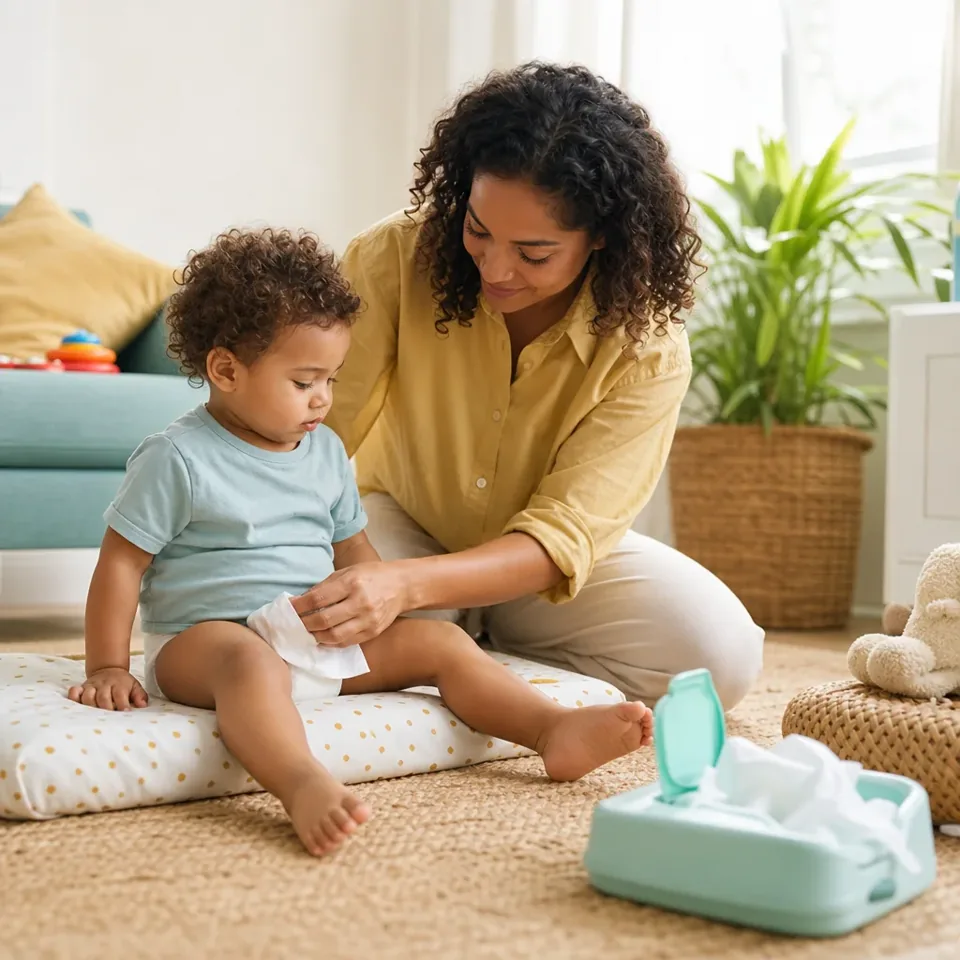
For routine setup, keep the changing supplies reachable before starting and check the exact wipe variety and its warnings.
The basis for this guide
Sources & editorial notes
Primary sources support the health, safety, and technical statements linked above. Worked examples and household worksheets are practical illustrations prepared for this guide; they are not product tests.
Revised November 7, 2026. No independent medical or specialist review is credited to this edition. Read our editorial standards.
Illustrative imagery accompanies our guides; it does not document testing, a reader’s home, or a clinical assessment.
Report a correction ↗