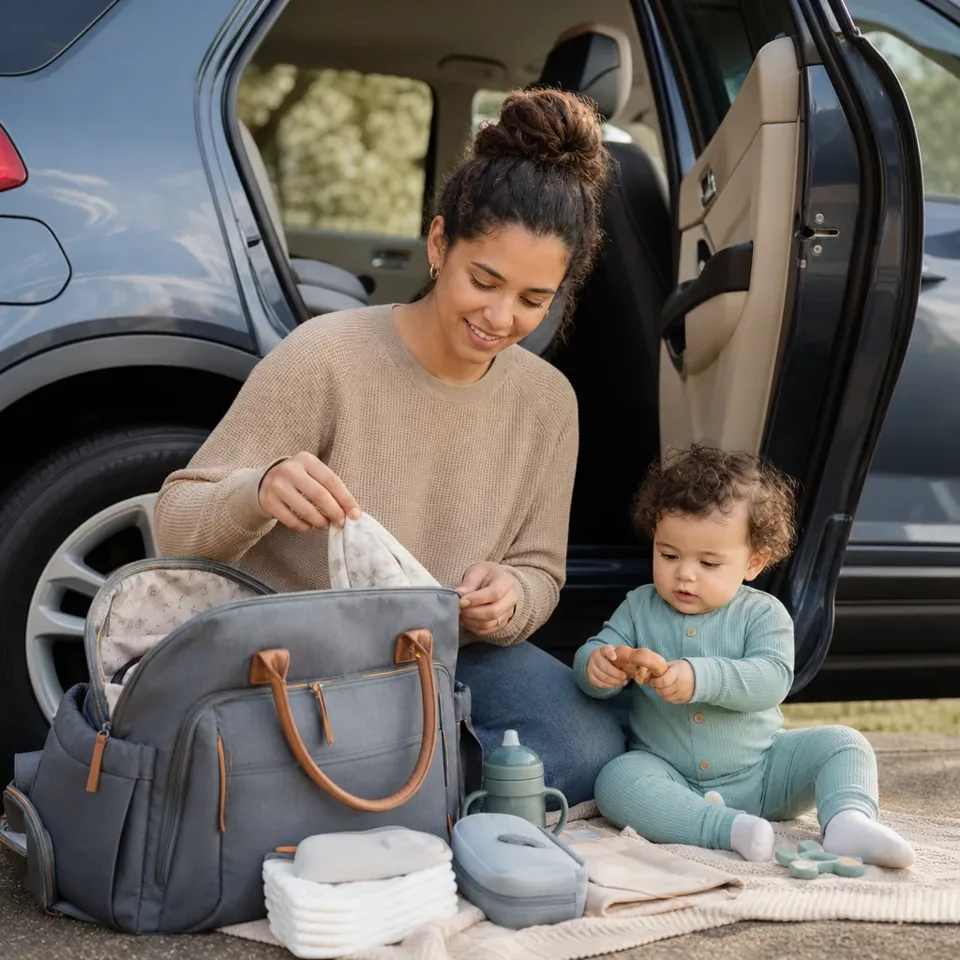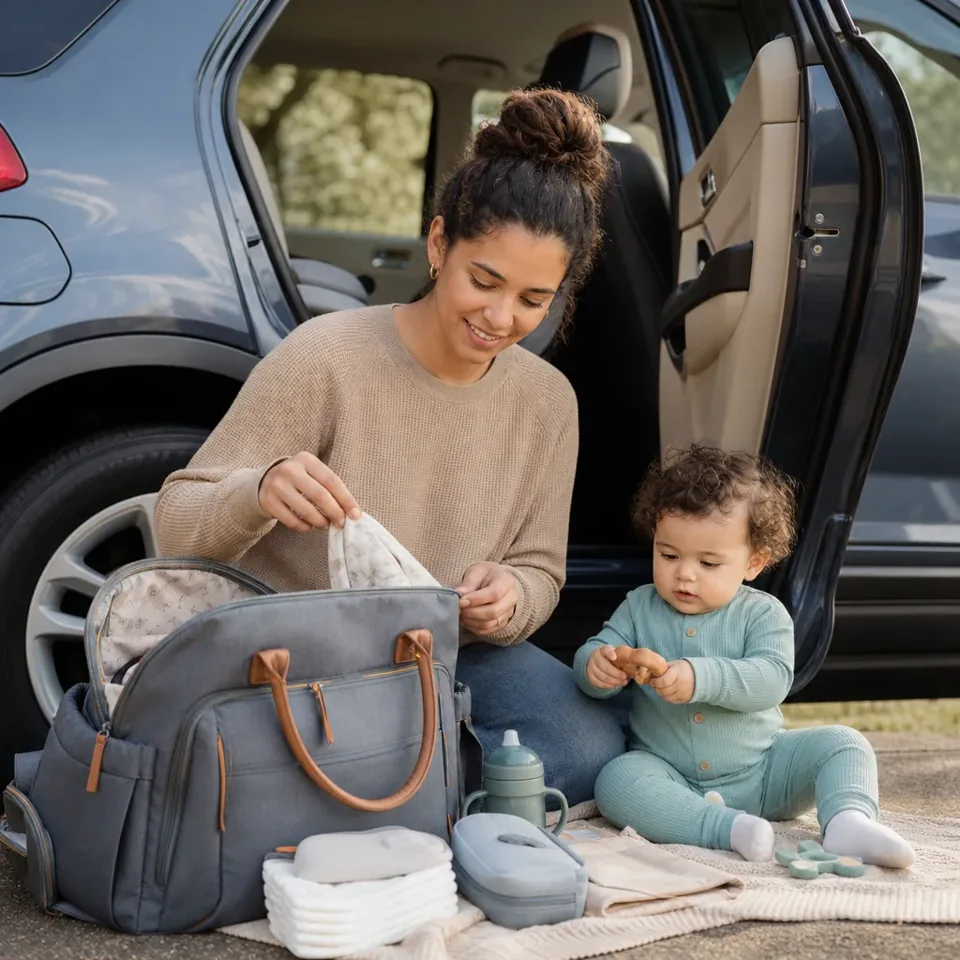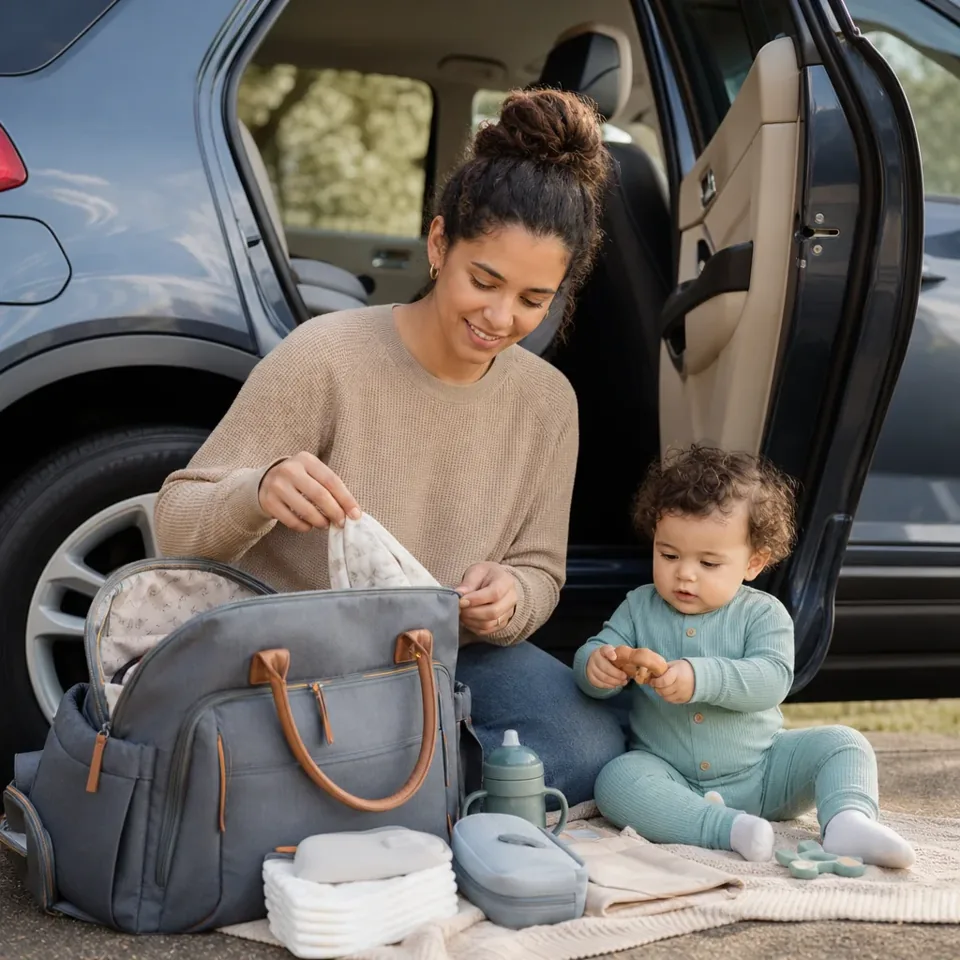
Compare access, closures, care and each adult's ability to carry the actual outing load.
Bring a realistic packing list
List the changing kit, clothing, personal items and any separately managed feeding supplies. Where possible, compare the bags with representative contents before purchase and within the seller's handling rules. A pocket that appears spacious when empty may borrow space from the compartment beside it.
Check whether the changing surface, wipe pack and used-item container can be removed without spilling the rest. Open and close the main zip with the packed shape supported. Do not pull roughly or force a closure. A layout that requires compressing every item to close may be poorly matched to your ordinary load.
Assess carrying and access as separate tasks
Try the permitted strap adjustments for each adult who will use the bag. Consider the route, available places to set it down and how you will retrieve supplies while the child is safely cared for. Do not plan to rummage in a backpack while carrying a baby. If carrying causes pain or you have a relevant restriction, seek individualized advice; no bag style is a treatment.
Keep stroller storage separate from the backpack choice. The AAP advises against bags on stroller handles. An accessory strap supplied with a bag does not establish a safe use with your stroller.
Check the unglamorous parts
Read the cleaning and drying instructions for the lining, straps and any removable pieces. Check replacement-part information and return terms. “Water resistant,” “insulated” and “machine washable” describe different things; record what the actual label says. Do not infer food-storage safety, disinfectability or durability from a feature name.
Fictional bag comparison
More pockets, less usable access
Two backpacks advertise similar capacity. With the same sample contents, one hides the wipes behind the clothing pouch and its closure strains. The second has fewer pockets but keeps the changing module accessible. The family chooses based on their packed arrangement and care instructions, without claiming the bag is universally more comfortable.
Make it your own
Check the backpack with the real list
Use the fields for your practical notes, then print a copy for the handoff. Entries stay on this page and reset on reload.
These fields do not save or send your entries. Avoid private health, access, or contact details. Without JavaScript, you can still fill in and print the page with your browser.
First define the changing module for a specific trip. If packing for siblings, separate each child's supplies before comparing capacity.
The basis for this guide
Sources & editorial notes
Primary sources support the health, safety, and technical statements linked above. Worked examples and household worksheets are practical illustrations prepared for this guide; they are not product tests.
Revised November 7, 2026. No independent medical or specialist review is credited to this edition. Read our editorial standards.
Illustrative imagery accompanies our guides; it does not document testing, a reader’s home, or a clinical assessment.
Report a correction ↗